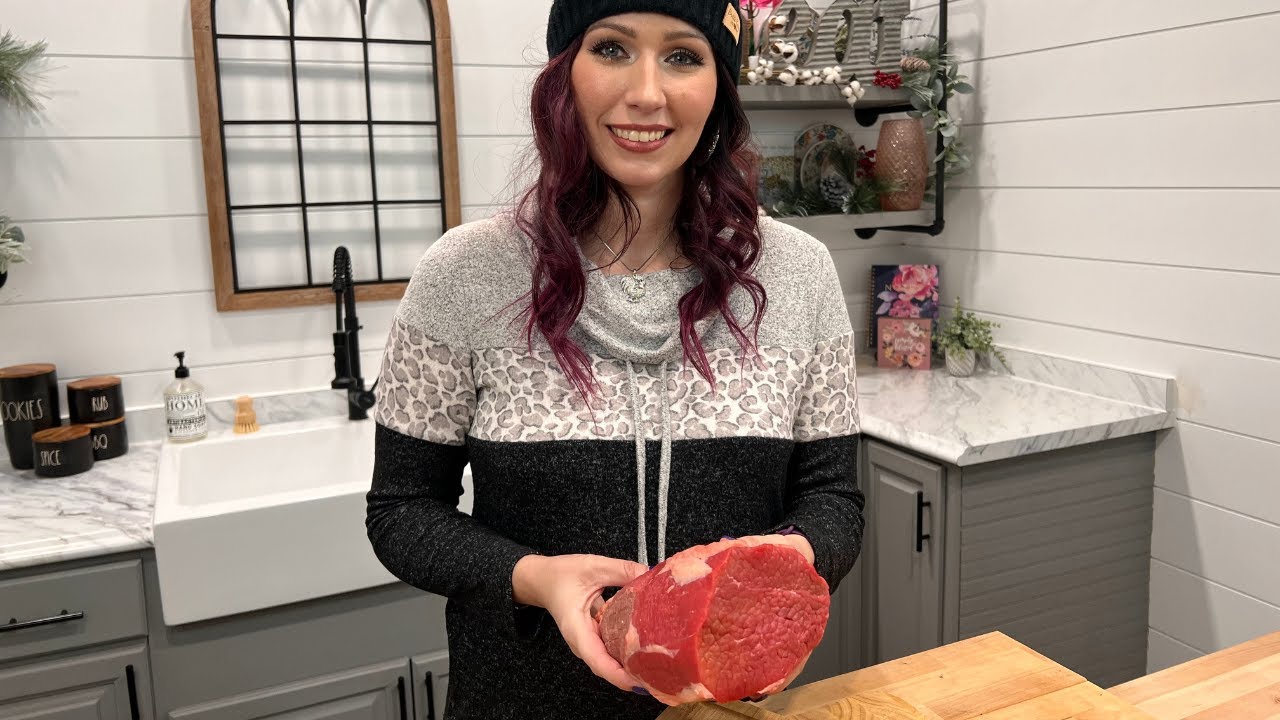
Lean beef cuts are popular for their versatility and lower fat content, yet many home cooks struggle to distinguish between similar options from the round primal. Two such cuts, the eye of round and the inside round, often appear side by side in butcher cases. While both come from the rear leg of the animal, each offers its own mix of texture, flavor, and ideal cooking techniques. Understanding the eye of round vs inside round helps ensure better results in the kitchen, especially when you’re choosing a roast or planning a meal that requires leaner cuts.
Understanding The Cuts
The round primal is naturally lean because it comes from a heavily exercised part of the animal. Within this section sits the eye of round, a tight, cylindrical muscle known for its uniform shape and very low marbling. It is one of the leanest cuts available, making it a preferred choice for those seeking budget-friendly roasts or dishes that rely on precise slicing.
The inside round, sometimes referred to as the top round, is larger, slightly more complex in muscle structure, and tends to have a bit more internal moisture compared to the eye of round. Though still lean, the inside round offers more flexibility in how it cooks because of its larger size and mild marbling. These subtle differences become clearer when we compare texture and flavor.
Texture: Firm Vs Moderately Tender
Texture plays a major role in how these cuts behave during cooking. The eye of round has a very tight grain with almost no internal fat, leading to a firm and sometimes chewy texture if cooked improperly. Because of its lack of inherent tenderness, it is best prepared using low-to-slow cooking techniques or sliced thinly after roasting. When handled well, it produces clean, uniform slices that work wonderfully for sandwiches, stir-fries, or deli-style roasts.
The inside round, on the other hand, has a slightly looser grain and a bit more moisture retained within the fibers. While still far from tenderloin territory, it does offer a touch more natural tenderness than the eye of round. Because of this, it adapts better to roasting and braising, and it is a favored cut for dishes like London broil or thin-sliced roast beef. Although it still requires proper cooking to avoid toughness, its texture is more forgiving.
Flavor: Subtle Differences In A Lean Category
Both cuts fall into the lean beef category, meaning neither carries the deep richness that comes from heavily marbled steaks. However, the inside round tends to deliver a slightly fuller beef flavor thanks to its marginally higher fat content and broader muscle structure. This makes it more appealing for roasts intended to stand alone as the centerpiece of a meal.
The eye of round has a mild, clean flavor that depends heavily on seasoning, marinades, or the method used to cook it. While it will not overpower other ingredients, its simplicity makes it a reliable canvas for spices, rubs, or sauces. When roasted rare and sliced thin, its flavor is subtle but satisfying, especially when paired with bold seasoning blends.
Best Uses In The Kitchen
Choosing between eye of round and inside round often comes down to how you plan to cook them. The eye of round excels in slow-roasting methods where the goal is to maintain a rosy center and achieve thin, uniform slices. It is ideal for cold roast beef, beef jerky, sliced steak salads, or dishes where texture matters more than fall-apart tenderness. It also suits sous vide cooking, which helps compensate for its naturally firm structure.
The inside round is more versatile. It works well in dry roasting, braising, slicing, or marinating. Because of its slightly higher moisture content, it performs well when cut into steaks for quick grilling or broiling, provided it is marinated to enhance tenderness. It also stands up beautifully in pot roasts and slow-cooked recipes, absorbing seasonings while maintaining its shape.
Choosing The Right Cut For Your Meal
Both cuts offer excellent value, especially for cooks who appreciate lean beef. Select the eye of round when you need clean, even slices and a neutral flavor that pairs well with seasonings. Pick the inside round when you want more flexibility, a fuller beef taste, and a cut that performs well across a wider range of cooking methods.
Ultimately, neither is better than the other; they simply shine in different roles. Understanding their differences allows you to match the cut to the cooking technique, ensuring your dish turns out as flavorful and enjoyable as possible.
